9 hr
Mekong Delta Day Trip: My Tho & Ben Tre Coconut Village
Cruise the Mekong's tranquil waterways, meet local artisans, and taste coconut candy in charming villages
Reserve
Hand-picked by our editors — only the best 5 canal and village experiences from 18 reviewed
Verified partners for every tour, free cancellation where available, and instant confirmation on every booking.
9 hr
Cruise the Mekong's tranquil waterways, meet local artisans, and taste coconut candy in charming villages
Reserve
9 hr
Explore the lush Mekong Delta by motorboat, rowboat, and tuk-tuk while sampling local treats and honey
Reserve
9 hr 30 min
Explore tranquil canals, century-old temples, and authentic riverside life on this immersive delta adventure
ReservePrices from verified partners. Availability updates in real time at checkout. Free cancellation policies apply where shown.
The landmarks, rooms, and views travelers on this tour remember — all visible on a single visit.
A historic pagoda featuring a blend of Vietnamese, Chinese, and Khmer architectural styles, known for its massive Buddha statues.
My Tho and Ben Tre offer a convenient introduction to river life near Ho Chi Minh City, while the Cai Rang Floating Market provides a more authentic, deep-delta commercial experience. They complement each other; most visitors who do both call the floating market the more thrilling option.
| Feature | Top pick My Tho & Ben Tre | Can Tho & Cai Rang |
|---|---|---|
Travel distance from HCMC |
70–80 km | 160–170 km |
Primary experience |
Village crafts and canal boat rides | Wholesale floating commerce and life |
Market type |
Land-based fruit orchards and workshops | River-based floating wholesale market |
Expected crowd levels |
High peak tour volume | Moderate early morning activity |
Atmosphere |
Accessible and manicured | Active and traditional |
Canal navigation |
Small sampans in shaded creeks | Large boats on main river arteries |
| See tickets → |
Verdict: Choose the mekong delta tour my tho ben tre tour for proximity and ease, or select the Cai Rang market if you seek the mekong delta tour my tho ben tre tours alternative for an immersive look at regional maritime trade supported by booking your mekong delta tour my tho ben tre tickets in advance.
Choose your ticket, select your date, and reserve in under two minutes. Secure checkout handled by our verified partner.
Instant confirmation by email, with a mobile voucher you can save offline. No printing, no queuing at a collection desk.
Arrive at the entrance, show your voucher on your phone, and walk in. Most tickets include priority or skip-the-line access.
Practical details for your visit straight from our verified partners — hours, access, rules, and how to get there.
Modest clothing is recommended when visiting local pagodas or spiritual sites. Lightweight, breathable fabrics are advised due to the humid climate.
Keep belongings minimal and secure while on boats. Most tour operators do not provide formal bag storage, so carry only essential items.
Photography is encouraged throughout the canals and islands. Respect local privacy when photographing residents or traditional music performances.
Navigating the region often involves boarding small wooden sampans and walking on uneven village paths. Most mekong delta tour my tho ben tre tours are not suitable for wheelchair users.
The mekong delta tour my tho ben tre is generally family-friendly, though parents should supervise children closely during boat transfers and canal crossings.
Most tours include a traditional lunch with local river specialties. Bottled water is typically provided, but carrying extra hydration is recommended.
Best time to go, insider tips, nearby landmarks, and the cancellation fine print — flip through to skim what matters to you.
Flexible, no hidden fees.
Full refunds are typically available for cancellations made at least 24 hours in advance. Entrance fees are 0 VND as public areas are free, but tour-specific facility fees are governed by the operator's booking terms.
The Mekong Delta splits into nine distributary arms before emptying into the South China Sea, and the twin provinces of Tien Giang and Ben Tre guard two of those channels. My Tho, the capital of Tien Giang, sits seventy kilometres southwest of Ho Chi Minh City where the Tien River—one of the Mekong's two main Vietnamese branches—divides into smaller arteries that feed orchards, fish farms, and paddies. Ben Tre Province lies across the water, a 65,000-hectare patchwork of coconut plantations that supply half the nation's copra. The region has no single monument; its attraction is the hydraulic lattice itself, a lived-in ecosystem of floating markets, brick kilns fired with rice husks, and villages accessible only by sampan. Vinh Trang Pagoda, completed in 1850 near My Tho's riverfront, demonstrates the delta's synthesis of Khmer, Chinese, and Vietnamese architecture—its porcelain-mosaic dragons and French colonial flourishes reflect a century of migration and trade. The pagoda's five-hectare garden shelters towering Buddhas cast in concrete, but most visitors spend less than thirty minutes here before boarding narrow boats for the island hamlets. Thoi Son and Con Phung, two islets mid-channel, host family-run honey farms and workshops where artisans split green coconuts to extract meat, press oil, and ferment sap into rượu dừa, a mildly alcoholic palm wine. Production methods remain manual: no industrial presses, no synthetic additives. Ben Tre's canal network extends for 1,800 kilometres, more than the Mekong's main stem through Vietnam. Tuk-tuks navigate the wider paths between villages; narrower channels require wooden sampans steered with a single oar. The waterways carry commercial traffic—barges stacked with coconuts, sand dredges, ice blocks wrapped in jute—but also serve as the primary commuter route for schoolchildren and market vendors. Coconut candy workshops line the banks, their gas burners caramelizing cane sugar and coconut milk in open woks before workers shape the molten syrup into cellophane-wrapped rectangles. The delta produces 140 million coconuts annually, and Ben Tre accounts for sixty per cent of that yield, a figure that has held steady since the 1990s despite urban migration and rising sea levels that push saline intrusion fifteen kilometres inland each dry season.
"The delta produces 140 million coconuts annually, and Ben Tre accounts for sixty per cent of that yield."
A step-by-step walkthrough of the visit — what you'll see, how long each stage takes, and the details that matter.
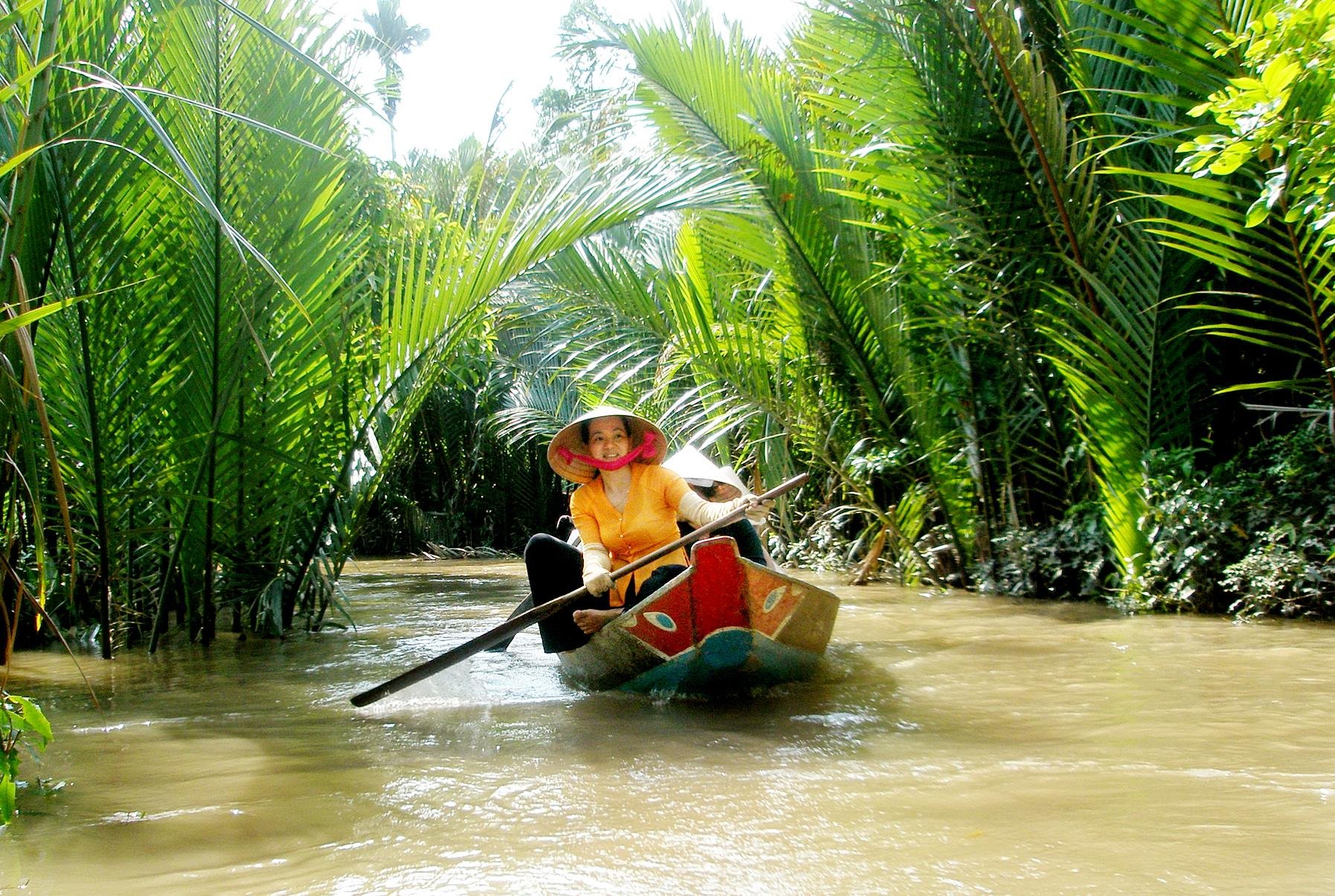
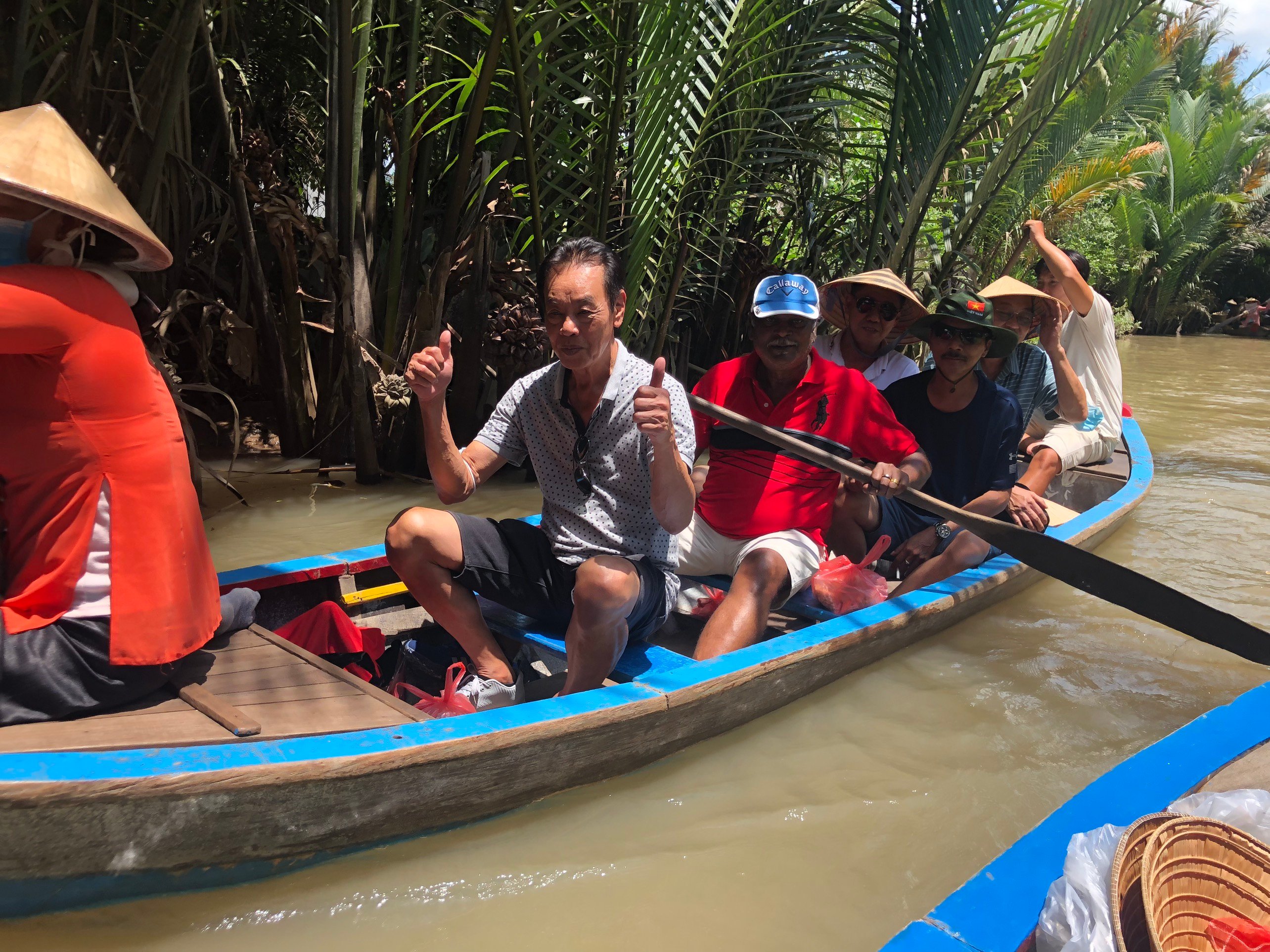
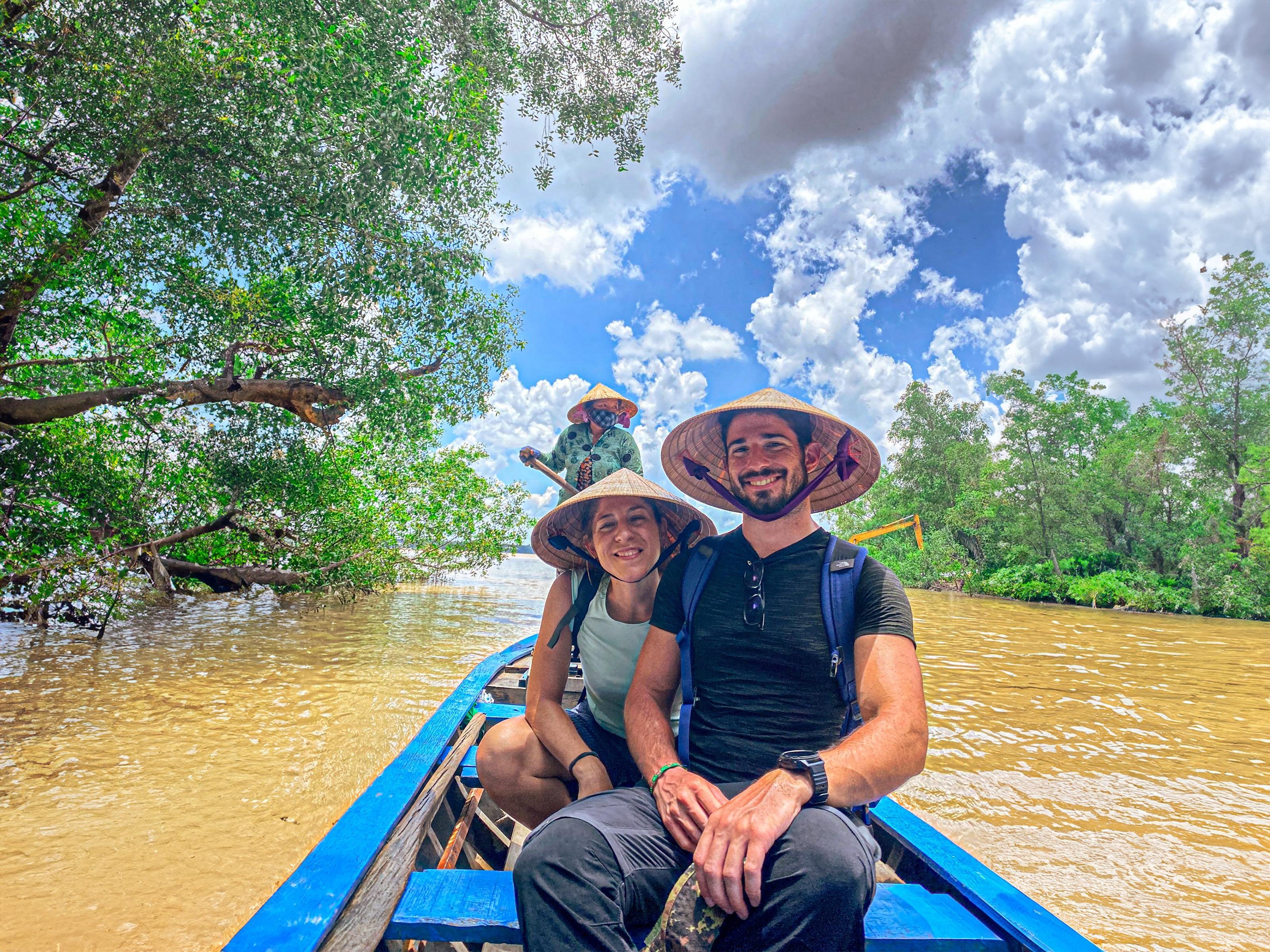
You depart Ho Chi Minh City before eight, when the highway still runs clear. Two hours later the coach pulls into My Tho's pier district, where wooden boats with outboard motors idle against bamboo docks. You board a twelve-seat sampan and push into the Tien River, past cargo barges and fishing trawlers trailing nets. The boat turns into a narrow canal shaded by water coconut palms, their fronds forming a tunnel overhead. You disembark at Thoi Son Island, walk a dirt path past longan orchards, and pause at a thatched pavilion where a guide demonstrates honey harvesting from wooden hives suspended above the ground. You taste the honey on rice crackers, then cross a footbridge to a workshop where an elderly woman splits coconuts with a machete and scrapes the white meat into a steel grinder. The resulting milk steams in a vat over a charcoal fire. You transfer to a smaller sampan rowed by hand through a canal barely three metres wide, the only sound the dip of the oar and the rustle of nipa palms. You surface at a Ben Tre coconut-candy factory, watch workers fold caramelized syrup into sheets, and sample the warm blocks before they set. The return boat departs at half past three, reaching the city by six.
The region is accessible daily from 07:00–18:00. Tours typically operate during these hours, though schedules depend on your specific operator.
Entry to the Mekong Delta region is 0 VND, though specific facilities like farms or private piers may charge individual fees.
The best arrival window is 07:00–10:00 to avoid midday heat and peak tour crowds.
Yes, you can purchase mekong delta tour my tho ben tre tickets through various operators online or via local travel agencies.
Yes, children are welcome on a mekong delta tour my tho ben tre, but should be supervised on boats.
Dress modestly for religious sites and wear comfortable, breathable clothing suitable for tropical weather.
Yes, photography is allowed and encouraged, especially during the scenic boat rides and at traditional workshops.
Most standard tours include a lunch featuring local specialties, though you should verify your specific mekong delta tour my tho ben tre tour inclusions.
Most tours depart from Ho Chi Minh City via organized bus or private car; check your specific booking for meeting points.
Yes, you can combine your trip with visits to the Vinh Trang Pagoda or local coconut candy workshops during your mekong delta tour my tho ben tre.