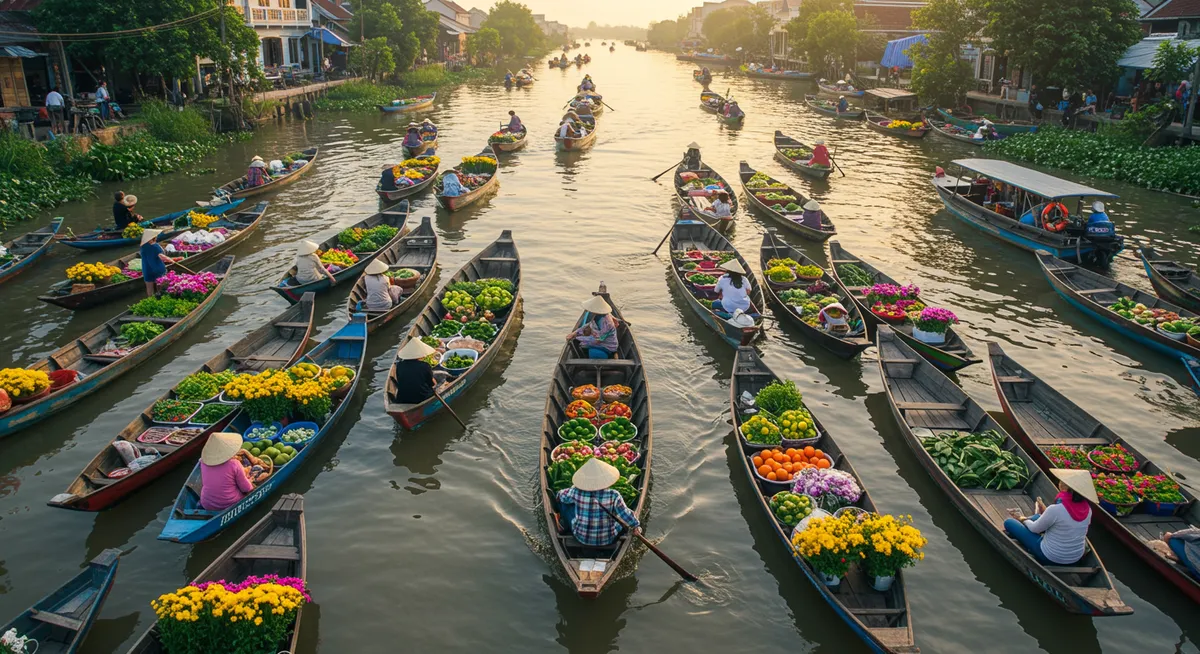
Cai Rang Floating Market
This active wholesale market serves as a central hub for regional produce distribution on the river.
Arrive by boat before 07:00 to see the peak trading volume.

The Mekong Delta stretches across 40,500 square kilometers of southern Vietnam, a labyrinth of rivers, canals, and agricultural land that supplies half the country's rice. Whether the region justifies a detour from Ho Chi Minh City depends on what you're prepared to find: working waterways, not postcard scenery, and cultural immersion that requires patience.
Quick answer
The Mekong Delta is worth visiting if you want to see rural Vietnamese life beyond the cities—floating markets, canal-side villages, fruit orchards, and rice paddies that define the country's agricultural backbone. The region is free to enter and explore year-round (00:00–23:59 daily), with no admission fee. Most visitors allocate two to three days. The experience rewards those who venture beyond the standard day-trip circuit from Ho Chi Minh City and engage with the slower rhythm of river life.
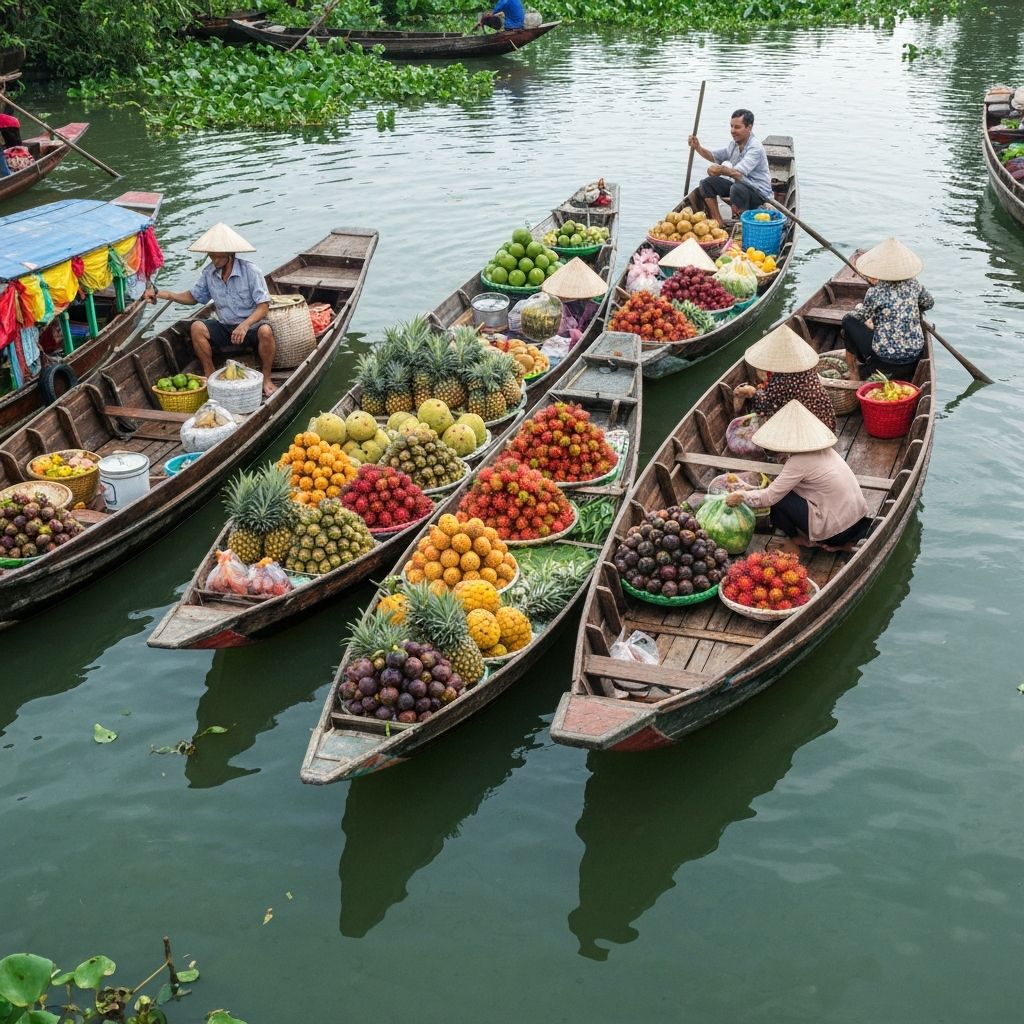
More than 17 million people live in the Mekong Delta, most of them along the nine tributary branches that give the region its Vietnamese name—Cửu Long, the Nine Dragons. This is not a single destination but a working river system where daily life unfolds on water: farmers ferry produce in narrow wooden boats, markets convene at dawn on floating platforms, and entire communities occupy stilt houses along the canals. The question of whether visiting the Mekong Delta is worthwhile depends entirely on expectations. The floating markets—Cái Răng near Cần Thơ and Cái Bè between Mỹ Tho and Vĩnh Long—operate as wholesale hubs, not tourist spectacles. Vendors hang samples of their goods from tall poles to signal what they're selling, and transactions happen boat-to-boat in the early hours. Arriving after 09:00 means encountering only a fraction of the activity. The delta's other signature experiences—cycling through coconut groves, sampling tropical fruit in orchards, watching rice-paper production, visiting Khmer pagodas—are quiet, incremental encounters that lack the dramatic payoff of coastal or mountain landscapes. What the region does offer is access to an older agrarian Vietnam that has largely disappeared from the cities. Ben Tre's narrow canals reveal village industries—coconut candy workshops, brick kilns, honey farms—that remain family-run. The town of Sa Đéc preserves colonial-era architecture and the house that inspired Marguerite Duras's novel. Cần Thơ, the delta's largest city, serves as the logistical base for deeper exploration and holds a night market that functions for residents, not visitors. The Mekong Delta rewards visitors who approach it as an immersive experience rather than a checklist. Staying overnight in a homestay, rising before dawn to reach the markets, and traveling by local ferry or bicycle shifts the encounter from observation to participation. Those unwilling to navigate the heat, the early starts, and the lack of urban polish will find the delta a poor use of limited time in Vietnam. Those prepared for a slower, grittier reality will find a region that remains stubbornly itself.
“The delta's signature experiences are quiet, incremental encounters that lack the dramatic payoff of coastal or mountain landscapes but reveal an older agrarian Vietnam that has largely disappeared from the cities.”
The optimal time to explore the Mekong Delta is during the dry season from December to April, coupled with an early morning start. This window provides stable weather and manageable humidity for outdoor excursions.
Dry, 25°C to 34°C. Expect clear skies and minimal rain.
The most comfortable period for navigating canals and visiting local markets.
Humid, 24°C to 32°C. Frequent short tropical downpours.
Lush green landscapes emerge, though travel plans may require flexibility due to rain.
—
Arriving during this best arrival window avoids midday heat and peak tourist boat congestion.
Verdict: The best slot for a visit is between December and April, arriving between 06:00 and 09:00 to ensure a calm experience on the water.
The Mekong Delta offers a distinct landscape defined by its intricate river systems, traditional agriculture, and localized commerce. Visitors explore these areas to observe the region's reliance on water-based infrastructure and rural production methods.
This active wholesale market serves as a central hub for regional produce distribution on the river.
Arrive by boat before 07:00 to see the peak trading volume.
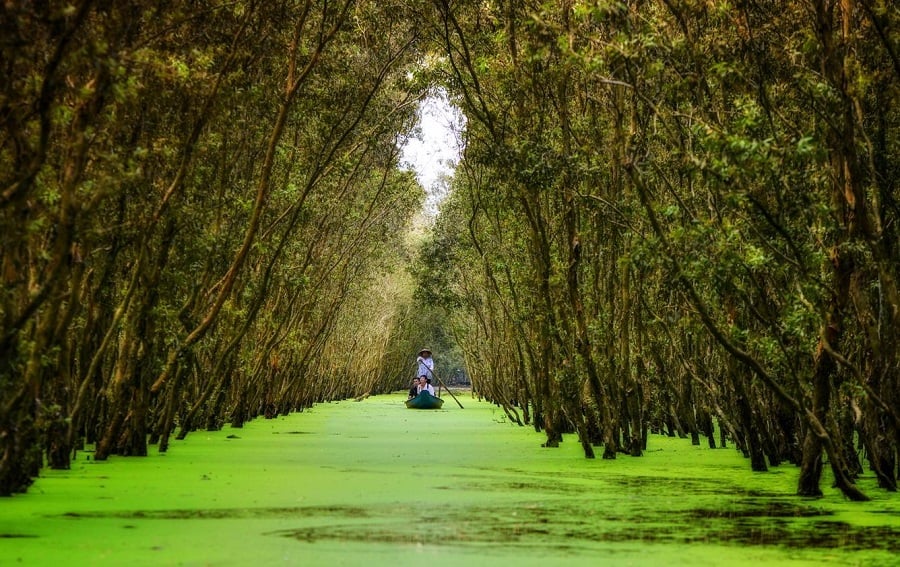
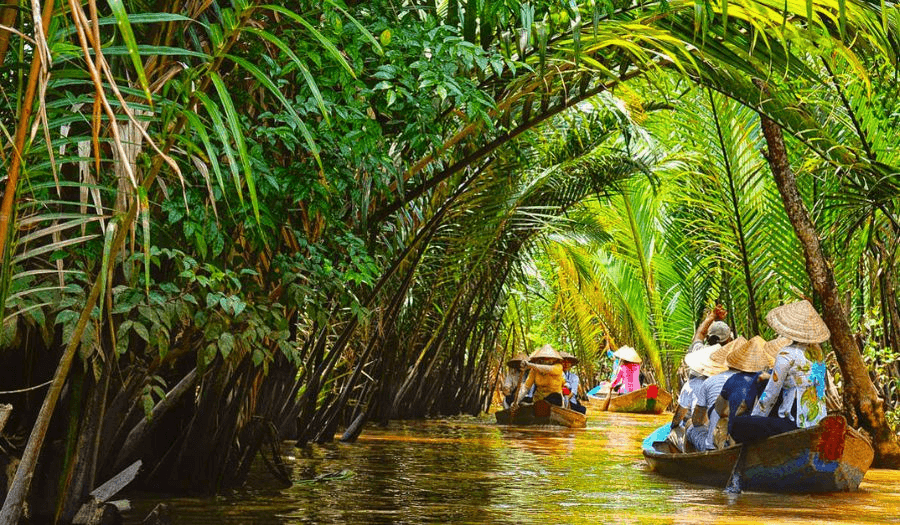
A protected mangrove forest featuring narrow canals and abundant bird species accessible via small sampan.
Visit during the morning to observe wildlife in quieter conditions.
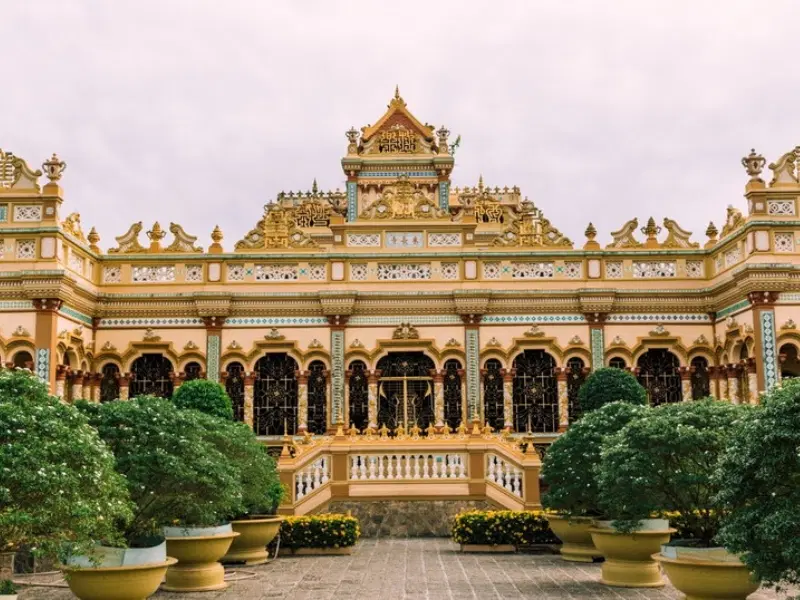
A historic Buddhist temple in My Tho blending Vietnamese, Khmer, and French architectural elements.
Walk the perimeter to view the detailed ceramic mosaic exterior.
The region is known for its extensive coconut groves and diverse tropical fruit farms.
Participate in a guided walk to see traditional harvesting techniques.
The Mekong Delta is a vast geographical region rather than a single ticketed attraction, meaning there is no centralized admission fee. Travelers do not pay an entry cost to access the delta itself.
Verdict: An adult pays 0 VND for general entry, though specific activities or private site visits incur separate costs.
The Mekong Delta is a region located in southern Vietnam, accessible from Ho Chi Minh City primarily via road networks. Most travelers reach the delta by bus or private car to access the river port gateways.
Western Bus Station (Bến Xe Miền Tây) to various provincial hubs
National Route 1A (QL1A) toward the delta provinces
Direct transfer from Ho Chi Minh City to specific riverside towns
The best arrival window is 06:00–09:00. Arriving during this period helps visitors avoid midday heat and peak tourist boat congestion.
The Mekong Delta rewards prepared visitors but punishes rushed itineraries and climate miscalculations. Most disappointments stem from inadequate time allocation or poor seasonal planning.
Attempting to see the entire delta in one day
The region spans nine provinces across 40,000 square kilometers. Allocate at least two to three days to experience floating markets, orchards, and villages without exhausting transfer time.
Visiting during midday heat without sun protection
Temperatures regularly exceed 35°C between 11:00 and 15:00 with minimal shade on boats. Schedule water activities for early morning (06:00–09:00) and carry water, hats, and high-SPF sunscreen.
Arriving during peak flood season unprepared
September through November brings monsoon flooding that closes roads and limits access to certain areas. Check water levels before booking and expect altered itineraries during this period.
Booking tours without verifying boat capacity
Overcrowded group boats diminish the experience on narrow canals. Confirm maximum passenger numbers and consider private charters for flexibility on less-traveled waterways.
Skipping cash for rural transactions
Many village markets, fruit farms, and family-run homestays operate cash-only. Withdraw sufficient Vietnamese dong before leaving major towns, as ATMs are sparse in remote areas.
Everything you need to know about is mekong delta worth visiting
Travelers often find that the Mekong Delta provides a deep cultural insight into Vietnam, making it a highly rewarding destination for those interested in local river life. Deciding if is Mekong Delta worth visiting depends on your interest in lush landscapes and authentic rural experiences.
Opting for a guided Ben Tre river cruise allows you to navigate the intricate canal networks safely while supporting local boat operators. Many visitors agree that this approach helps determine why is Mekong Delta worth visiting for photography and cultural immersion.
The region is accessible every day of the week, with operations running from 00:00 to 23:59. This accessibility ensures that you can plan your visit according to your preferred travel schedule.
As a large geographical region, there is no single entrance fee of 0 VND for the area. You will only encounter costs if you choose to book specific local activities, transport, or guided services.
A Ben Tre excursion is frequently cited as a highlight for those exploring the wider region. It offers a quieter alternative to more crowded tourist hubs, further proving why is Mekong Delta worth visiting.
To avoid peak heat and high tourist boat congestion, the best arrival window is 06:00–09:00. Arriving early provides a much more serene experience while observing the morning markets on the water.
There are no specific entry restrictions for the region as it is a sprawling rural territory. Visitors should simply remain respectful of local customs and private property when moving through the various villages.
Even with limited time, a short visit to the region offers a stark contrast to the bustle of Ho Chi Minh City. Evaluating if is Mekong Delta worth visiting often comes down to prioritizing a few hours on the water to see the floating markets and orchards.
Ben Tre Day Trip from Ho Chi Minh
Read more GuideHow Far is Mekong Delta from Ho Chi Minh City?
Read more Tickets & toursMy Tho & Ben Tre Mekong Delta Tour
Read more GuidePlanning Your Stay: Mekong Delta Duration
Read more GuideMekong Delta Tour Price Guide
Read more GuideBest Time to Visit: Mekong Delta Weather
Read more